
Can you visit Gnosca Observatory? No regular public access
Private observatory, no public access.
For telescope views near Gnosca Observatory, see the observatories open to the public and astronomy clubs nearby; clubs hold free public star parties.
What Gnosca Observatory observes
The list does not describe the instruments at Gnosca Observatory yet; the official site has them.
How dark the sky is at Gnosca Observatory
Gnosca Observatory has no Bortle rating in the list yet. The scale below shows what each class looks like.
Sky brightness and class come from the World Atlas of Artificial Night Sky Brightness (Falchi et al. 2016, CC BY-NC 4.0), with natural skyglow added, at the coordinates below. Research telescopes are often sited on mountains above the haze, so the real sky can be darker than the map suggests.
Gnosca Observatory among the observatories of Switzerland
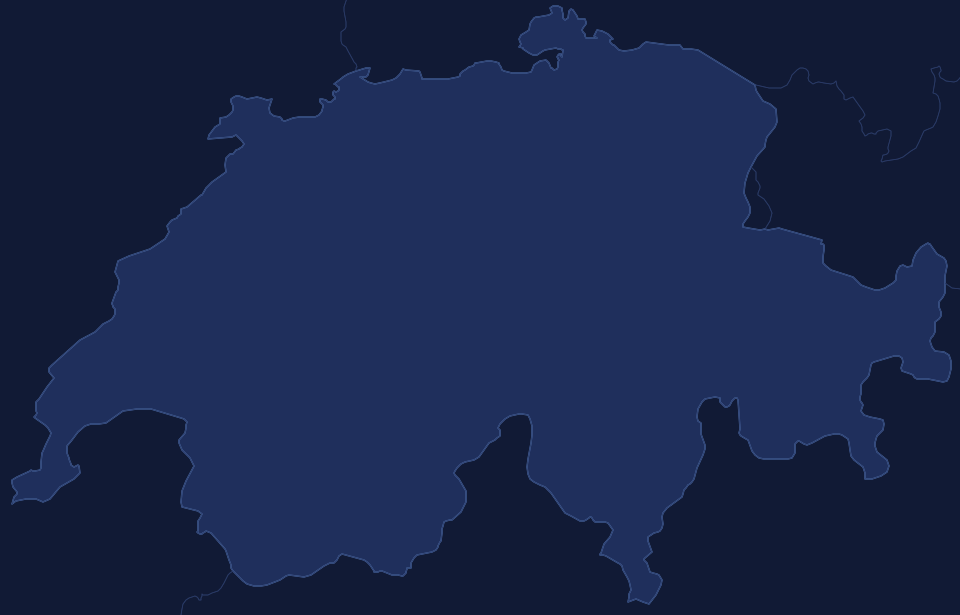
Green dots are observatories open to the public, blue dots research or private sites, squares dark sky places; select one for its page. See Observatories in Switzerland for the full list.
The coordinates on this page point to Gnosca Observatory (Wikipedia, MPC 143): 46.234°N, 9.024°E.
Map data © OpenStreetMap contributors. Open the larger map · Directions. Mountain observatory roads are often gated after dark; go only on a scheduled public night.
Dark sky places, observatories and clubs near Gnosca Observatory
Nearest dark sky places
| Place | Where | Bortle | Distance |
|---|---|---|---|
| Jungfrau-Aletsch | Bettmeralp, Switzerland | 4 | 74 km (46 mi) |
| Capo di Lago di Darfo Boario Terme | Darfo Boario Terme, Italy | 5 | 96 km (60 mi) |
| Swiss National Park | Zernez, Switzerland | 3 | 107 km (66 mi) |
| Rhone Valley | St-Luc, Switzerland | 4 | 109 km (67 mi) |
| Saint-Barthelemy Valley | Nus, Italy | 4 | 129 km (80 mi) |
| Malga del Doss | Ossana, Italy | 4 | 131 km (82 mi) |
Other observatories open to the public within 150 km
- Mirasteilas ObservatoryFalera, Graubunden, Switzerland, 65 km (40 mi). Guided tours Fridays and Saturdays, start time varies by season; ages 12+, registration required; children's tours 2026
- Merate ObservatoryMerate, Lombardy, Italy, 67 km (42 mi). Evening sky tours 3-4 times a month near first quarter; day tours and Open Nights; tickets via POEfactory
- Brera ObservatoryMilan, Lombardy, Italy, 86 km (53 mi). Museo Astronomico di Brera open to visitors in the Brera palace; Merate site has occasional open days
- Sphinx ObservatoryJungfraujoch, Bern, Switzerland, 87 km (54 mi). Public viewing deck reached by elevator from Jungfraujoch railway station; research labs closed to visitors
- Bagnoud ObservatorySaint-Luc, Valais, Switzerland, 109 km (67 mi). Public astronomy evenings and daytime solar viewing; book via stationdesetoiles.ch
- Sternwarte SiriusSchwanden ob Sigriswil, Bern, Switzerland, 114 km (71 mi). Public presentations Fridays and often Saturdays, year-round; from CHF 16, book online
Astronomy clubs within 150 km
- Sternwarte MirasteilasFalera, Switzerland, 65 km (40 mi)
- Engadiner AstronomiefreundeSamedan, Switzerland, 73 km (45 mi)
- Astronomische Gesellschaft GraubundenChur, Switzerland, 79 km (49 mi)
- Astronomische Gruppe des Kantons GlarusGlarus, Switzerland, 90 km (56 mi). Meets Fritz-Zwicky-Sternwarte, Kantonsschule Glarus
- Fritz-Zwicky-Sternwarte (Kantonsschule Glarus)Glarus, Switzerland, 90 km (56 mi)
Gnosca Observatory record
Every value in the observatories dataset for Gnosca Observatory
| ID | 552 |
|---|---|
| Name | Gnosca Observatory |
| City | Gnosca |
| State | Ticino |
| Country | Switzerland |
| Continent | Europe |
| Web | http://sposetti.ch/ |
| Public | n |
| Lat | 46.23444 |
| Lon | 9.02417 |
| LatLonSpot | Gnosca Observatory (Wikipedia, MPC 143) |
| Status | Active |
| StatusNote | Private observatory of Stefano Sposetti, MPC code 143 |
| PublicNote | Private observatory, no public access |
| Sources | https://en.wikipedia.org/wiki/Gnosca_Observatory |
From the site's observatories dataset (observatoriesglobal_q426). Distances are computed from the coordinates.