
Go Astronomy · mapping the night sky since 2004
Tonight
Your sky
Planets
The Moon and dark sky
-, -
-
Overhead now
-
Next meteor shower
-
-
The chart is the whole sky with the zenith at the center and the horizon at the rim: hold it overhead with north at the top. Click a planet, the Moon or a constellation name to open its page. Drag the slider to run the night forward.
Hubs
Constellations, Deep Sky and Solar System cover what to look at. Places covers where to look from, Events covers when, and Equipment and Learn cover what to look with and how.
All 88 constellations with their stars, deep-sky objects and best months, the 12 of the zodiac, asterisms such as the Big Dipper and the Summer Triangle, and a sky guide for every month.
Galaxies, nebulae and star clusters by catalog: Messier, Caldwell, the Herschel 400, NGC and IC, Arp, Sharpless, Barnard, Lynds, Abell and the Virgo Cluster Catalog.
Where the planets are tonight, the Sun, the Moon, Jupiter and Saturn and their moons, the dwarf planets from Ceres to Sedna, comets, meteor showers and the missions exploring them.
Dark sky parks and reserves rated on the Bortle scale, observatories from Keck to ALMA and Xuntian, planetariums, astronomy clubs and hotels built for stargazers.
Eclipses, meteor shower peaks, conjunctions and oppositions on one calendar, plus star parties from Cherry Springs to Okie-Tex and the Messier Marathon.
Telescopes by what each design shows, from Dobsonians and apochromatic refractors to Schmidt-Cassegrains, plus binoculars, eyepieces, filters, mounts and astrophotography kit.
How to observe, in order: dark adaptation, star hopping, magnitudes, right ascension and declination, seeing and transparency, and a 341-term glossary.
From the Moon outward
Light from the Moon takes 1.3 seconds to reach your eye. Light from the galaxies of the Virgo Cluster left them 54 million years ago, 12 million years after the dinosaurs died out. The scale below runs from 1 light-second to 10 billion light-years, each step 10 times the last.
Phases, maria, craters and the terminator tonight.
8.3 light-minutesWhere each planet is in tonight's sky.
5 light-hoursPluto, Eris, Haumea, Makemake and Sedna.
4.2 light-yearsProxima Centauri and the Gliese catalog.
1,344 light-yearsM42, the Pleiades, Sharpless and Barnard.
26,000 light-yearsIts arms, its core and its satellite galaxies.
2.5 million light-yearsAndromeda, Triangulum and the Magellanic Clouds.
54 million light-yearsThe Virgo Cluster, Arp galaxies and Abell clusters.
Go out
The backyard shows the Moon, the planets and a few hundred stars. A Bortle 1 sky shows the Milky Way bright enough to cast shadows, and a star party puts large Dobsonians and other observers within reach.
347 dark sky parks and reserves worldwide and 962 US parks and stargazing sites, the US sites rated on the Bortle scale.
54 star parties, from Cherry Springs and Okie-Tex to OzSky, each with the Moon and planets for its nights.
1,069 observatories and 1,599 planetariums, plus spotlights on Keck, Rubin, ALMA and FAST.
The Moon, Mars and the moons of Jupiter tonight are destinations tomorrow. Sister site SolarSystemOS maps what it takes to build there.
SolarSystemOS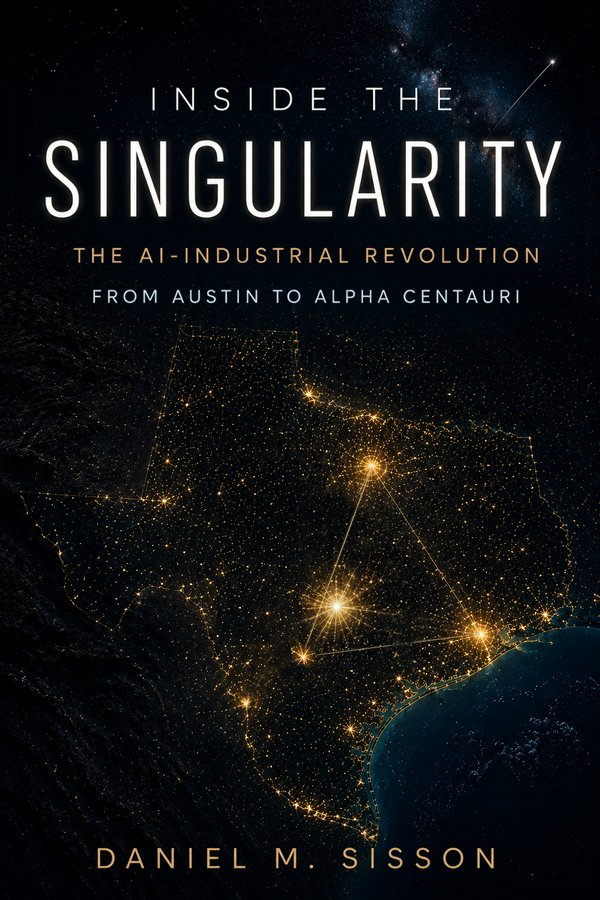
From the publisher of Go Astronomy
The AI-Industrial Revolution From Austin to Alpha Centauri, by Daniel M. Sisson. The closing chapters follow the build-out past Earth orbit to the Moon, Mars and the stars that Go Astronomy maps.
 The 88 Magnificent Constellations of the Night Sky
 Messier Majesties: Catalog of 110 Deep Sky Objects
 Orion Constellation Deep Sky Tour: Nebulae
 The Local Group: Galactic Neighbors Until the End of Time