
Can you visit Mehalso Observatory? No regular public access
Mehalso Observatory is a working research site without regular public viewing. Some research observatories open for an annual open house; the official site will say.
For telescope views near Mehalso Observatory, see the observatories open to the public and astronomy clubs nearby; clubs hold free public star parties.
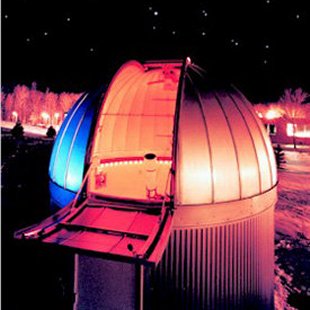
What Mehalso Observatory observes
The list does not describe the instruments at Mehalso Observatory yet; the official site has them.
How dark the sky is at Mehalso Observatory
Mehalso Observatory has no Bortle rating in the list yet. The scale below shows what each class looks like.
Sky brightness and class come from the World Atlas of Artificial Night Sky Brightness (Falchi et al. 2016, CC BY-NC 4.0), with natural skyglow added, at the coordinates below. Research telescopes are often sited on mountains above the haze, so the real sky can be darker than the map suggests.
Mehalso Observatory among the observatories of Pennsylvania

Green dots are observatories open to the public, blue dots research or private sites, squares dark sky places; select one for its page. See Pennsylvania observatories for the full list.
The coordinates on this page point to city Erie (approximate): 42.126°N, 80.086°W.
Map data © OpenStreetMap contributors. Open the larger map · Directions. Mountain observatory roads are often gated after dark; go only on a scheduled public night.
Dark sky places, observatories and clubs near Mehalso Observatory
Nearest dark sky places
| Place | Where | Bortle | Distance |
|---|---|---|---|
| Chapman State Park | Pennsylvania | 3 | 86 km (53 mi) |
| Allegheny National Forest | Pennsylvania | 3 | 102 km (63 mi) |
| Observatory Park Park District Park | Ohio | 4 | 102 km (63 mi) |
| Allegany State Park | New York | 4 | 113 km (70 mi) |
| Cook Forest State Park | Pennsylvania | 3 | 114 km (71 mi) |
| Clear Creek State Park | Pennsylvania | 3 | 122 km (76 mi) |
Other observatories open to the public within 150 km
- Martz-Kohl ObservatoryFrewsburg, New York, 79 km (49 mi). Open Observatory Nights on Wednesdays 7:30 pm plus guest-speaker evenings; $5 suggested donation for non-members
- Oil Region Astronomical ObservatoryVenango County, Pennsylvania, 84 km (52 mi). ORAS public nights and the ASTROBLAST star party (Oct) at the Astronomy Learning Center
Astronomy clubs within 150 km
- Oil Region Astronomical SocietyOil City, Pennsylvania, 84 km (52 mi)
- Mahoning Valley Astronomical SocietyNewton Falls, Ohio, 127 km (79 mi). Meets Last Saturday monthly: Apr-Oct 8 pm at the club observatory, Braceville; Nov-Mar 6 pm
Star parties near Mehalso Observatory
| Star party | Near | Distance | Usual timing |
|---|---|---|---|
| Black Forest Star Party | Coudersport, Pennsylvania | 194 km (121 mi) | September |
| Cherry Springs Star Party | Coudersport, Pennsylvania | 194 km (121 mi) | June, near new moon |
| Starfest | Ayton, Ontario | 226 km (141 mi) | August new moon |
| Almost Heaven Star Party | Riverton, West Virginia | 384 km (239 mi) | New-moon weekend in August |
Planning a trip? Astrotourism in Pennsylvania puts the dark sky places, observatories, clubs, star parties, planetariums and science centers of the state on one map, with the best night out worked out.
Mehalso Observatory record
Every value in the observatories dataset for Mehalso Observatory
| ID | 389 |
|---|---|
| Name | Mehalso Observatory |
| Address | Otto Behrend Science Bldg, Penn State |
| City | Erie |
| State | PA |
| Country | USA |
| Web | psbehrend.psu.edu/school-of-science/laboratory-facilities/mehalso-observatory-astronomy |
| Public | n |
| Lat | 42.12600 |
| Lon | -80.08600 |
| LatLonSpot | city Erie (approximate) |
| Status | Active |
| StatusNote | Penn State Behrend teaching observatory; current public program not confirmed |
| Sources | https://behrend.psu.edu/node/34972 |
From the site's observatories dataset (observatories_q426). Distances are computed from the coordinates.