
Can you visit Durham University Observatory? Historic site
Listed building; no public observing.
For telescope views near Durham University Observatory, see the observatories open to the public and astronomy clubs nearby; clubs hold free public star parties.
Telescopes at Durham University Observatory
16", 2-14", robotic 14" Meades.
How dark the sky is at Durham University Observatory
Durham University Observatory has no Bortle rating in the list yet. The scale below shows what each class looks like.
Sky brightness and class come from the World Atlas of Artificial Night Sky Brightness (Falchi et al. 2016, CC BY-NC 4.0), with natural skyglow added, at the coordinates below. Research telescopes are often sited on mountains above the haze, so the real sky can be darker than the map suggests.
Durham University Observatory among the observatories of England
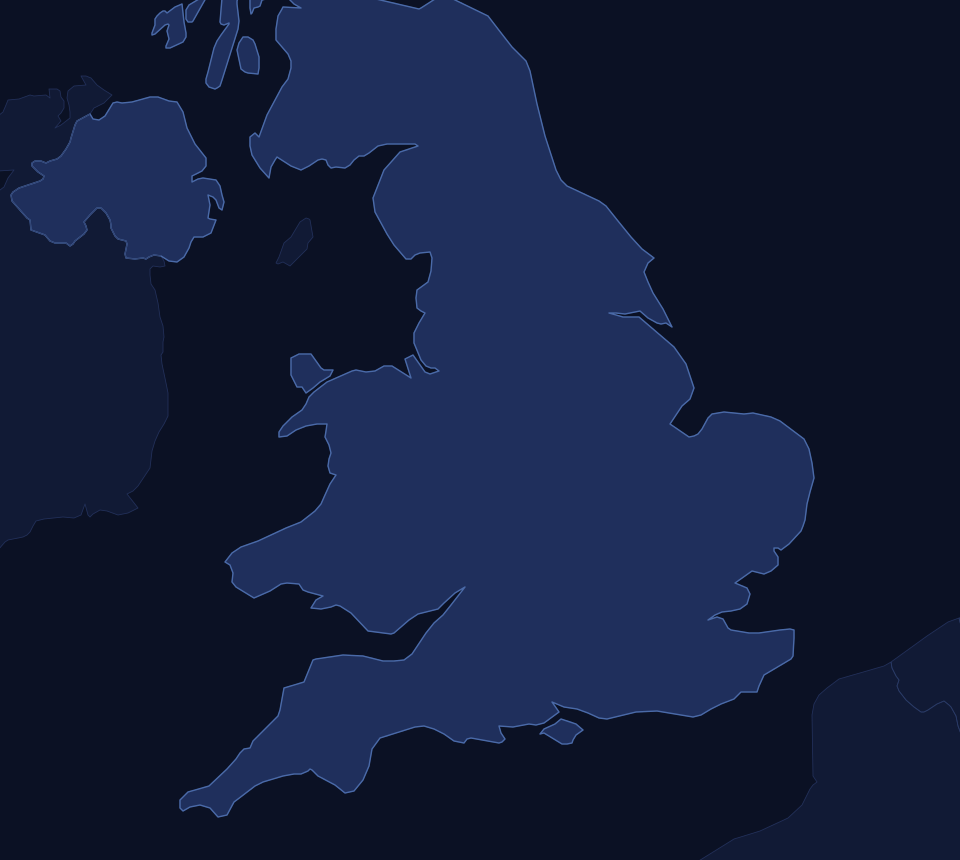
Green dots are observatories open to the public, blue dots research or private sites, squares dark sky places; select one for its page. See Observatories in England for the full list.
The coordinates on this page point to Durham University Observatory, Potters Bank: 54.768°N, 1.586°W.
Map data © OpenStreetMap contributors. Open the larger map · Directions. Mountain observatory roads are often gated after dark; go only on a scheduled public night.
Dark sky places, observatories and clubs near Durham University Observatory
Nearest dark sky places
| Place | Where | Bortle | Distance |
|---|---|---|---|
| North York Moors National Park | Thirsk, England | 4 | 64 km (40 mi) |
| Yorkshire Dales National Park | Hawes, England | 4 | 65 km (40 mi) |
| Northumberland International Dark Sky Park | Kielder, England | 2 | 84 km (52 mi) |
| Lake District National Park | Keswick, England | 3 | 108 km (67 mi) |
| Moffat Dark Sky Community | Moffat, Scotland | 4 | 134 km (83 mi) |
| Peak District National Park | Castleton, England | 4 | 158 km (98 mi) |
Other observatories open to the public within 150 km
- Kielder ObservatoryKielder Forest, Northumberland, England, 84 km (52 mi). Ticketed stargazing events most nights year-round; book well ahead
- J.A. Jones Hoober ObservatoryWentworth, South Yorkshire, England, 145 km (90 mi). Public stargazing evenings Sep-Mar with talk and telescopes; summer Sunday solar observing
Astronomy clubs within 150 km
- Durham Astronomical SocietyDurham, England, 1 km (1 mi). Meets 4th Friday monthly Sep-Jun except Dec, 7:30 pm
- Bishop Auckland Astronomical SocietyBishop Auckland, Durham, England, 14 km (9 mi). Meets 1st Friday monthly except Jan and Aug, 7:00 pm
- Sunderland Astronomical SocietyWashington, Tyne & Wear, England, 15 km (10 mi). Meets 3rd Sunday monthly, Cygnus Observatory
- Newcastle Astronomical SocietyNewcastle upon Tyne, Tyne & Wear, England, 23 km (14 mi). Meets 3rd Thursday monthly Sep-May, 7:00 pm
- Cleveland & Darlington Astronomical SocietyThorpe Thewles, Durham, England, 28 km (17 mi). Meets 2nd Friday monthly Sep-Jun, 7:30 pm
Star parties near Durham University Observatory
| Star party | Near | Distance | Usual timing |
|---|---|---|---|
| Dalby Forest Starfest | Pickering, England | 81 km (50 mi) | Spring |
| Equinox Sky Camp | Holt, England | 272 km (169 mi) | Near the September equinox |
| AstroCamp | Brecon, Wales | 340 km (212 mi) | Spring and autumn |
| Mayo Dark Sky Festival | Newport, County Mayo | 526 km (327 mi) | Autumn |
Durham University Observatory record
Every value in the observatories dataset for Durham University Observatory
| ID | 144 |
|---|---|
| Name | Durham University Observatory |
| City | Potters Bank |
| State | Durham |
| Country | England |
| Continent | Europe |
| Subcontinent | UK |
| Web | https://durhamweather.webspace.durham.ac.uk/ |
| Public | n |
| Telescope | 16", 2-14", robotic 14" Meades |
| Elevation | 102 |
| Lat | 54.76800 |
| Lon | -1.58600 |
| LatLonSpot | Durham University Observatory, Potters Bank |
| Status | Historic |
| StatusNote | Built 1839 as astronomical observatory; now a weather observatory (Met Office automatic station) |
| PublicNote | Listed building; no public observing |
| Sources | https://en.wikipedia.org/wiki/Durham_University_Observatory |
From the site's observatories dataset (observatoriesglobal_q426). Distances are computed from the coordinates.