
Can you visit Molonglo Observatory Synthesis Telescope (MOST)? No regular public access
Research site, no public access.
For telescope views near Molonglo Observatory Synthesis Telescope (MOST), see the observatories open to the public and astronomy clubs nearby; clubs hold free public star parties.
What Molonglo Observatory Synthesis Telescope (MOST) observes
The list does not describe the instruments at Molonglo Observatory Synthesis Telescope (MOST) yet; the official site has them.
How dark the sky is at Molonglo Observatory Synthesis Telescope (MOST)
Molonglo Observatory Synthesis Telescope (MOST) has no Bortle rating in the list yet. The scale below shows what each class looks like.
Sky brightness and class come from the World Atlas of Artificial Night Sky Brightness (Falchi et al. 2016, CC BY-NC 4.0), with natural skyglow added, at the coordinates below. Research telescopes are often sited on mountains above the haze, so the real sky can be darker than the map suggests.
Molonglo Observatory Synthesis Telescope (MOST) among the observatories of Australia
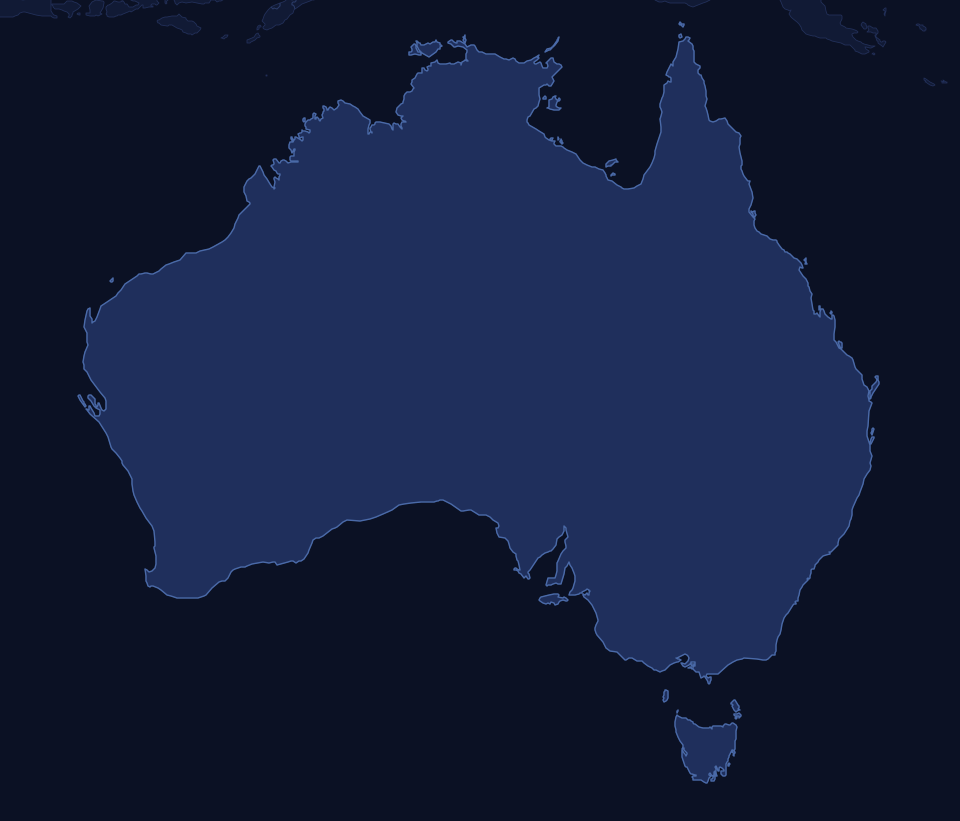
Green dots are observatories open to the public, blue dots research or private sites, squares dark sky places; select one for its page. See Observatories in Australia for the full list.
The coordinates on this page point to MOST, Molonglo Observatory near Hoskinstown: 35.371°S, 149.424°E.
Map data © OpenStreetMap contributors. Open the larger map · Directions. Mountain observatory roads are often gated after dark; go only on a scheduled public night.
Dark sky places, observatories and clubs near Molonglo Observatory Synthesis Telescope (MOST)
Nearest dark sky places
| Place | Where | Bortle | Distance |
|---|---|---|---|
| Barrenjoey Headland | Palm Beach, Australia | 4 | 265 km (165 mi) |
Other observatories open to the public within 150 km
- Mount Stromlo ObservatoryAustralian Capital Territory, Australia, 38 km (24 mi). Grounds and memorial open in daytime; check ANU site for public events
Astronomy clubs within 150 km
- Canberra Astronomical SocietyCanberra, Australian Capital Territory, Australia, 38 km (24 mi). Meets 3rd Thursday monthly (Jan-Nov), 8 pm
- Shoalhaven AstronomersNowra, New South Wales, Australia, 120 km (74 mi). Meets 3rd Friday monthly (except Dec), 7:30 pm
Star parties near Molonglo Observatory Synthesis Telescope (MOST)
| Star party | Near | Distance | Usual timing |
|---|---|---|---|
| South Pacific Star Party | Ilford, New South Wales | 271 km (168 mi) | Autumn new moon |
| OzSky Star Safari | Coonabarabran, New South Wales | 456 km (283 mi) | Autumn new moons, two sessions |
Molonglo Observatory Synthesis Telescope (MOST) record
Every value in the observatories dataset for Molonglo Observatory Synthesis Telescope (MOST)
| ID | 34 |
|---|---|
| Name | Molonglo Observatory Synthesis Telescope (MOST) |
| City | Hoskinstown |
| State | New South Wales |
| Country | Australia |
| Continent | Oceania |
| Web | https://www.sydney.edu.au/science/schools/school-of-physics.html |
| Public | n |
| Lat | -35.3707 |
| Lon | 149.42400 |
| LatLonSpot | MOST, Molonglo Observatory near Hoskinstown |
| Status | Active |
| StatusNote | University of Sydney with Swinburne; feeds decommissioned 2018, now transit-mode FRB and pulsar work (UTMOST) |
| PublicNote | Research site, no public access |
| Sources | https://en.wikipedia.org/wiki/Molonglo_Observatory_Synthesis_Telescope |
From the site's observatories dataset (observatoriesglobal_q426). Distances are computed from the coordinates.