
Can you visit Submillimeter Array? No regular public access
No public access.
For telescope views near Submillimeter Array, see the observatories open to the public and astronomy clubs nearby; clubs hold free public star parties.

Telescopes at Submillimeter Array
8 x 6m sub-mm dishes.
Mauna Kea Observatories (MKO): 11 observatories on one site
- Canada-France-Hawaii TelescopeResearch observatory
- Gemini North ObservatoryResearch observatory
- James Clerk Maxwell TelescopeResearch observatory
- Maunakea Spectroscopic Explorer (proposed)Research observatory
- NASA Infrared TelescopeResearch observatory
- Subaru TelescopeResearch observatory
- Thirty Meter Telescope (proposed)Research observatory
- UH 2.2m TelescopeResearch observatory
- Very Long Baseline Array - Mauna Kea StationResearch observatory
- W. M. Keck ObservatoryPublic observatory, open to the public
How dark the sky is at Submillimeter Array
Submillimeter Array has no Bortle rating in the list yet. The scale below shows what each class looks like.
Sky brightness and class come from the World Atlas of Artificial Night Sky Brightness (Falchi et al. 2016, CC BY-NC 4.0), with natural skyglow added, at the coordinates below. Research telescopes are often sited on mountains above the haze, so the real sky can be darker than the map suggests.
Submillimeter Array among the observatories of Hawaii
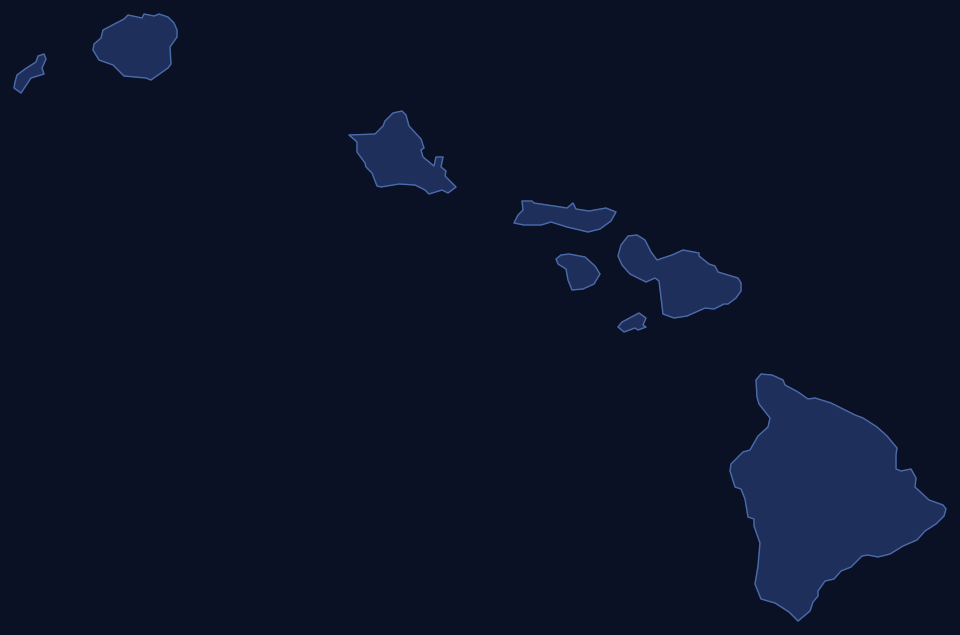
Green dots are observatories open to the public, blue dots research or private sites, squares dark sky places; select one for its page. See Hawaii observatories for the full list.
The coordinates on this page point to SMA array center (Wikipedia): 19.824°N, 155.478°W.
Map data © OpenStreetMap contributors. Open the larger map · Directions. Mountain observatory roads are often gated after dark; go only on a scheduled public night.
Dark sky places, observatories and clubs near Submillimeter Array
Submillimeter Array is about 8 km (5 mi) from Mauna Kea, a Bortle Class 2 dark sky place. See Mauna Kea for camping, where to set up and the sky by season.
Nearest dark sky places
| Place | Where | Bortle | Distance |
|---|---|---|---|
| Mauna Kea | Hawaii | 2 | 8 km (5 mi) |
| Hawaii Volcanoes National Park | Hawaii | 5 | 49 km (30 mi) |
| Kau Forest Reserve | Hawaii | 2 | 68 km (42 mi) |
| Manuka State Wayside | Hawaii | 1 | 87 km (54 mi) |
| Wai'anapanapa State Park | Hawaii | 2 | 119 km (74 mi) |
| Haleakala National Park | Hawaii | 2 | 128 km (79 mi) |
Other observatories open to the public within 150 km
- W. M. Keck ObservatoryMaunakea, Hawaii Island, Hawaii, 0 km (0 mi). Summit Visitors' Gallery inside Keck I open daily 10 am-2:30 pm (4WD above 9,200 ft); no night viewing; headquarters in Waimea
- Maunakea ObservatoriesMauna Kea, Hawaii, 1 km (1 mi). Maunakea Visitor Information Station (2,800 m) hosts monthly reservation stargazing events; summit domes closed to public except resident KOE tours
Planning a trip? Astrotourism in Hawaii puts the dark sky places, observatories, clubs, star parties, planetariums and science centers of the state on one map, with the best night out worked out.
Submillimeter Array record
Every value in the observatories dataset for Submillimeter Array
| ID | 257 |
|---|---|
| Name | Submillimeter Array |
| Acronym | SMA |
| Address | summit |
| City | Mauna Kea |
| State | HI |
| Country | USA |
| Web | https://lweb.cfa.harvard.edu/sma/ |
| Public | n |
| Jobs | https://www.maunakeaastronomyjobs.org/employers/7/smithsonian-astrophysical-observatory-submillimeter-array-hawaii.html |
| Git | https://github.com/Smithsonian/mir2matlab |
| Telescope | 8 x 6m sub-mm dishes |
| Complex | Mauna Kea Observatories (MKO) |
| Parent | SAO |
| Elevation | 4080 |
| Lat | 19.82430 |
| Lon | -155.47800 |
| LatLonSpot | SMA array center (Wikipedia) |
| Status | Active |
| StatusNote | Operated by Smithsonian Astrophysical Observatory and Academia Sinica |
| PublicNote | No public access |
| Sources | https://en.wikipedia.org/wiki/Submillimeter_Array |
| ParkID | 195 |
| ParkKm | 7.6 |
From the site's observatories dataset (observatories_q426). Distances are computed from the coordinates.