
How dark the sky is at Kobuk Valley: Bortle Class 1, excellent dark-sky site
The zenith sky here reads 22.00 magnitudes per square arcsecond. That is as dark as a natural sky gets: almost all the glow comes from airglow and starlight, not lamps.
Milky Way
The Milky Way casts faint shadows; the Scorpius and Sagittarius star clouds show structure to the naked eye
Zodiacal light
Zodiacal light, the gegenschein and the zodiacal band are all visible
Faintest naked-eye stars
Magnitude 7.6 to 8.0 overhead
Naked eye
M33 is a direct-vision naked-eye object; airglow makes the sky faintly green near the horizon
At the eyepiece
Galaxies to magnitude 14 and fainter show in a 200 mm telescope; the limit is your eye, not the sky
Sky brightness and class come from the World Atlas of Artificial Night Sky Brightness (Falchi et al. 2016, CC BY-NC 4.0), with natural skyglow added. On the night, haze, smoke, humidity and the Moon set the real limit; see every Bortle Class 1 place.
What's up from Kobuk Valley by season
At latitude 67.1°N, the north celestial pole stands 67° above the horizon, close to Polaris. Every star north of declination -23° rises at some time of year. The Milky Way core in Sagittarius never rises here. These are the constellations well placed, 35° or more above the horizon, at about 10 pm in the middle of each season, brightest first.
January evenings (winter): Auriga, Taurus, and Gemini
- AurigaHigh in the south, brightest star Capella
- TaurusIn the southwest, brightest star Aldebaran
- GeminiIn the southeast, brightest star Pollux
- Ursa MajorHigh in the east, brightest star Alioth
- PerseusHigh in the southwest, brightest star Mirfak
- Ursa MinorHigh in the north, brightest star Polaris
- AriesIn the southwest, brightest star Hamal
- AndromedaIn the west, brightest star Alpheratz
Also well placed: Draco, Cassiopeia, Cepheus, Triangulum, Lynx, Cancer, Leo Minor, Camelopardalis.
April evenings (spring): Bootes, Auriga, and Ursa Major
- BootesIn the southeast, brightest star Arcturus
- AurigaIn the west, brightest star Capella
- Ursa MajorOverhead, brightest star Alioth
- Ursa MinorOverhead, brightest star Polaris
- Corona BorealisIn the east, brightest star Alphecca
- DracoHigh in the northeast, brightest star Eltanin
- CassiopeiaIn the north, brightest star Schedar
- CepheusIn the north, brightest star Alderamin
Also well placed: Canes Venatici, Lynx, Leo Minor, Camelopardalis, Coma Berenices.
July evenings (summer): Bootes, Lyra, and Cygnus
- BootesIn the southwest, brightest star Arcturus
- LyraHigh in the southeast, brightest star Vega
- CygnusHigh in the east, brightest star Deneb
- Ursa MajorIn the northwest, brightest star Alioth
- Ursa MinorOverhead, brightest star Polaris
- Corona BorealisHigh in the southwest, brightest star Alphecca
- DracoOverhead, brightest star Eltanin
- CassiopeiaIn the northeast, brightest star Schedar
Also well placed: Cepheus, Hercules, Canes Venatici, Sagitta, Lacerta, Camelopardalis, Vulpecula.
October evenings (fall): Lyra, Cygnus, and Perseus
- LyraIn the west, brightest star Vega
- CygnusHigh in the southwest, brightest star Deneb
- PerseusHigh in the east, brightest star Mirfak
- Ursa MinorHigh in the north, brightest star Polaris
- AriesIn the southeast, brightest star Hamal
- AndromedaHigh in the southeast, brightest star Alpheratz
- DracoHigh in the northwest, brightest star Eltanin
- CassiopeiaOverhead, brightest star Schedar
Also well placed: Pegasus, Cepheus, Triangulum, Lacerta, Camelopardalis, Vulpecula.
Showpieces from Kobuk Valley through the year
| Sight | Constellation | January | April | July | October |
|---|---|---|---|---|---|
| Andromeda Galaxy (M31) | Andromeda | In the west | - | In the northeast | High in the southeast |
| Pleiades (M45) | Taurus | In the southwest | - | - | In the east |
| Double Cluster | Perseus | High in the west | In the northwest | In the northeast | High in the east |
| Whirlpool Galaxy (M51) | Canes Venatici | In the northeast | High in the southeast | High in the west | In the north |
| Hercules Cluster (M13) | Hercules | - | In the east | High in the south | In the northwest |
| Ring Nebula (M57) | Lyra | - | - | High in the southeast | In the west |
At about 10 pm on the 15th of each month; a dash means the sight is below 25° then.
Never set from Kobuk Valley
- Andromeda
- Auriga
- Bootes
- Camelopardalis
- Canes Venatici
- Cassiopeia
- Cepheus
- Coma Berenices
- Corona Borealis
- Cygnus
- Draco
- Gemini
- Hercules
- Lacerta
- Leo Minor
- Lynx
- Lyra
- Perseus
- Triangulum
- Ursa Major
- Ursa Minor
- Vulpecula
Only skim the southern horizon from Kobuk Valley
Never rise from Kobuk Valley
- Antlia
- Apus
- Ara
- Caelum
- Canis Major
- Carina
- Centaurus
- Chamaeleon
- Circinus
- Columba
- Corona Australis
- Crux
- Dorado
- Fornax
- Grus
- Horologium
- Hydrus
- Indus
- Lupus
- Mensa
- Microscopium
- Musca
- Norma
- Octans
- Pavo
- Phoenix
- Pictor
- Piscis Austrinus
- Puppis
- Pyxis
- Reticulum
- Sagittarius
- Scorpius
- Sculptor
- Telescopium
- Triangulum Australe
- Tucana
- Vela
- Volans
Where to set up at Kobuk Valley
The coordinates on this page point to Great Kobuk Sand Dunes, at 66 m (220 ft): 67.054°N, 158.913°W.
Map data © OpenStreetMap contributors. Open the larger map · Directions. Arrive before dark, park facing away from other observers, and use red light only.
Kobuk Valley among the dark sky places of Alaska
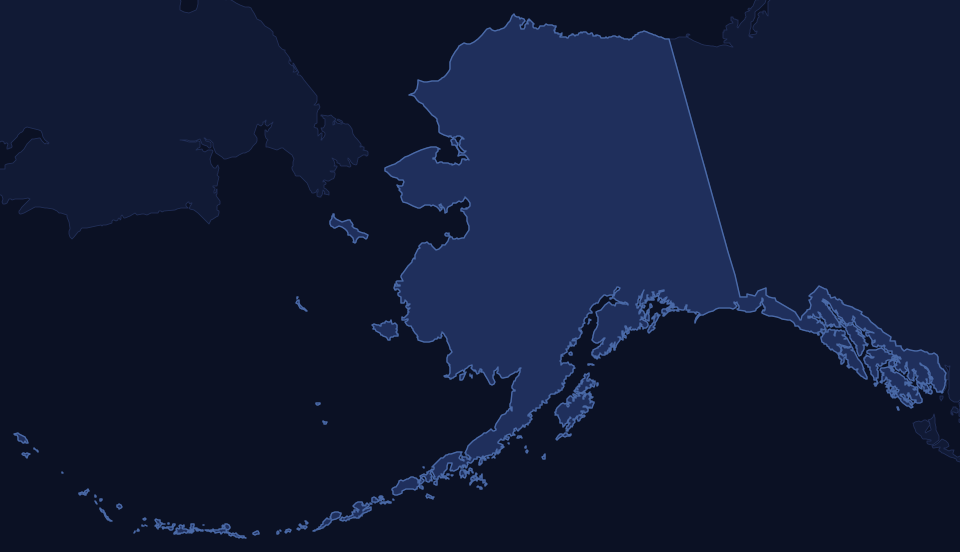
Each dot is a dark sky place, colored by Bortle class; select one for its page. See Alaska dark sky places for the full list, darkest first.
Camping and lodging at Kobuk Valley
Campgrounds
- Great Kobuk Sand Dunes
The nearest town with motels or inns is Kotzebue, AK.
Dark sky places nearest Kobuk Valley
| Place | Where | Bortle | Distance |
|---|---|---|---|
| Gates of the Arctic National Park | Alaska | 1 | 251 km (156 mi) |
| Denali National Park | Alaska | 4 | 591 km (367 mi) |
| Donnelly Creek State Recreation Site | Alaska | 2 | 709 km (441 mi) |
| Hatcher Pass Special Management Area | Alaska | 3 | 744 km (462 mi) |
| Fielding Lake State Recreation Site | Alaska | 1 | 752 km (467 mi) |
| King Mountain State Recreation Site | Alaska | 2 | 769 km (478 mi) |
| Wood-Tikchik State Park | Alaska | 1 | 772 km (480 mi) |
| Eklutna Lake State Park | Alaska | 4 | 783 km (487 mi) |
Planning a trip? Astrotourism in Alaska puts the dark sky places, observatories, clubs, star parties, planetariums and science centers of the state on one map, with the best night out worked out.
Observatories and astronomy clubs near Kobuk Valley
No observatory or astronomy club on the list is near Kobuk Valley.
See observatories and astronomy clubs in Alaska. Local clubs often hold their star parties at dark sky places like this one.
Kobuk Valley record
Every value in the dark sky places dataset for Kobuk Valley
| Park | 27 |
|---|---|
| Name | Kobuk Valley |
| TypeLong | National Park |
| Type1 | NP |
| Bortle | 1 |
| Near | Kotzebue |
| Statelong | Alaska |
| State | AK |
| Web | https://www.nps.gov/kova/index.htm |
| Camp1 | Great Kobuk Sand Dunes |
| Lat | 67.05389 |
| Lon | -158.91306 |
| LatLonSpot | Great Kobuk Sand Dunes |
| Elevation_m | 66 |
| LandManager | National Park Service |
| Status | Open |
| Lodging | Kotzebue, AK |
| Sources | https://www.alaska.guide/sand-dune/great-kobuk-sand-dunes |
| SQM | 22.00 |
From the site's dark sky places dataset (parks_q426). The sky by season is computed from the coordinates.