
How dark the sky is at Bosque Fray Jorge National Park: Bortle Class 2, typical truly dark site
The zenith sky here reads 21.98 magnitudes per square arcsecond. That is as dark as a natural sky gets: almost all the glow comes from airglow and starlight, not lamps.
Milky Way
The summer Milky Way is highly structured, with dark lanes visible to the naked eye
Zodiacal light
Zodiacal light is bright enough to cast faint shadows before dawn and after dusk
Faintest naked-eye stars
Magnitude 7.1 to 7.5 overhead
Naked eye
M33 is easy with direct vision; clouds show only as black holes in the starfield
At the eyepiece
Faint nebulae and galaxy detail come through well; this is a typical star party sky
Sky brightness and class come from the World Atlas of Artificial Night Sky Brightness (Falchi et al. 2016, CC BY-NC 4.0), with natural skyglow added. On the night, haze, smoke, humidity and the Moon set the real limit; see every Bortle Class 2 place.
What's up from Bosque Fray Jorge National Park by season
At latitude 30.7°S, the south celestial pole stands 31° above the horizon. Every star south of declination +59° rises at some time of year. The Milky Way core in Sagittarius climbs to 88° above the northern horizon. These are the constellations well placed, 35° or more above the horizon, at about 10 pm in the middle of each season, brightest first.
January evenings (summer): Canis Major, Carina, and Orion
- Canis MajorOverhead, brightest star Sirius
- CarinaHigh in the southeast, brightest star Canopus
- OrionHigh in the north, brightest star Rigel
- Canis MinorIn the northeast, brightest star Procyon
- EridanusHigh in the west, brightest star Achernar
- TaurusIn the northwest, brightest star Aldebaran
- VelaIn the southeast, brightest star Gamma Velorum
- HydraIn the east, brightest star Alphard
Also well placed: Puppis, Lepus, Columba, Hydrus, Dorado, Pictor, Reticulum, Pyxis, Monoceros, Volans, Fornax, Horologium, Caelum, Mensa.
April evenings (fall): Carina, Centaurus, and Crux
- CarinaIn the southwest, brightest star Canopus
- CentaurusHigh in the southeast, brightest star Alpha Centauri
- CruxHigh in the south, brightest star Acrux
- VirgoHigh in the northeast, brightest star Spica
- LeoIn the northwest, brightest star Regulus
- VelaHigh in the southwest, brightest star Gamma Velorum
- Triangulum AustraleIn the southeast, brightest star Atria
- HydraHigh in the west, brightest star Alphard
Also well placed: Puppis, Lupus, Corvus, Libra, Musca, Circinus, Crater, Pyxis, Volans, Norma, Chamaeleon, Antlia, Sextans.
July evenings (winter): Centaurus, Aquila, and Scorpius
- CentaurusIn the southwest, brightest star Alpha Centauri
- AquilaIn the northeast, brightest star Altair
- ScorpiusOverhead, brightest star Antares
- SagittariusHigh in the east, brightest star Kaus Australis
- Triangulum AustraleHigh in the south, brightest star Atria
- PavoHigh in the south, brightest star Peacock
- OphiuchusHigh in the north, brightest star Rasalhague
- LupusHigh in the southwest, brightest star Uridim
Also well placed: Libra, Serpens, Ara, Capricornus, Indus, Circinus, Telescopium, Apus, Scutum, Norma, Corona Australis, Microscopium.
October evenings (spring): Piscis Austrinus, Grus, and Sagittarius
- Piscis AustrinusOverhead, brightest star Fomalhaut
- GrusOverhead, brightest star Alnair
- SagittariusIn the west, brightest star Kaus Australis
- PavoIn the southwest, brightest star Peacock
- CetusHigh in the northeast, brightest star Diphda
- PegasusIn the north, brightest star Enif
- PhoenixHigh in the southeast, brightest star Ankaa
- HydrusIn the south, brightest star Beta Hydri
Also well placed: Capricornus, Tucana, Aquarius, Indus, Reticulum, Telescopium, Pisces, Octans, Fornax, Horologium, Equuleus, Sculptor, Microscopium.
Showpieces from Bosque Fray Jorge National Park through the year
| Sight | Constellation | January | April | July | October |
|---|---|---|---|---|---|
| Orion Nebula (M42) | Orion | High in the north | - | - | - |
| Pleiades (M45) | Taurus | In the northwest | - | - | - |
| Carina Nebula | Carina | In the southeast | High in the south | - | - |
| Large Magellanic Cloud | Dorado | High in the south | In the southwest | - | In the southeast |
| 47 Tucanae | Tucana | In the south | - | In the south | In the south |
| Omega Centauri | Centaurus | - | High in the southeast | In the southwest | - |
| Southern Cross | Crux | - | High in the south | In the southwest | - |
| Milky Way core | Sagittarius | - | - | Overhead | - |
| Lagoon Nebula (M8) | Sagittarius | - | - | Overhead | - |
At about 10 pm on the 15th of each month; a dash means the sight is below 25° then.
Never set from Bosque Fray Jorge National Park
- Apus
- Carina
- Chamaeleon
- Circinus
- Crux
- Dorado
- Hydrus
- Mensa
- Musca
- Octans
- Pavo
- Reticulum
- Triangulum Australe
- Tucana
- Volans
Only skim the northern horizon from Bosque Fray Jorge National Park
Never rise from Bosque Fray Jorge National Park
Where to set up at Bosque Fray Jorge National Park
The coordinates on this page point to Park center (Wikipedia infobox), at 300 m (980 ft): 30.663°S, 71.683°W.
Map data © OpenStreetMap contributors. Open the larger map · Directions. Arrive before dark, park facing away from other observers, and use red light only.
Bosque Fray Jorge National Park among the dark sky places of Chile
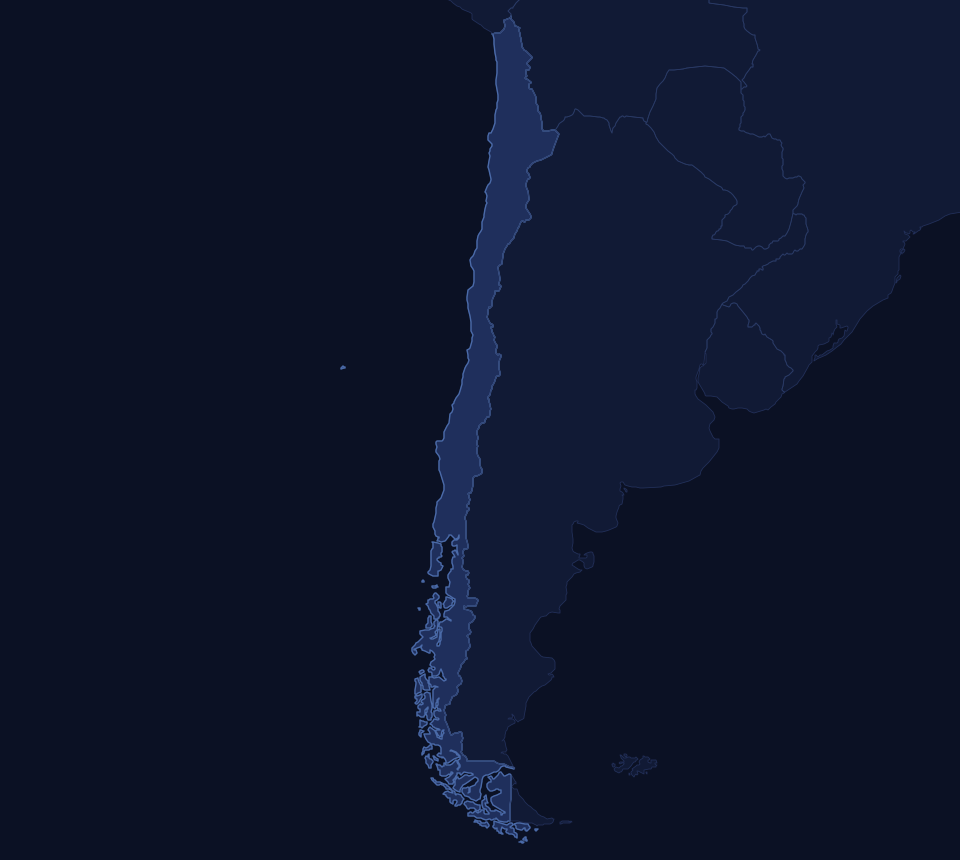
Each dot is a dark sky place, colored by Bortle class; select one for its page. See Dark sky places outside the United States for the full list, darkest first.
Camping and lodging at Bosque Fray Jorge National Park
The nearest town with motels or inns is Ovalle, Chile. Check the official site for campgrounds and overnight rules; many parks close their gates at night, so ask about after-dark access.
Dark sky places nearest Bosque Fray Jorge National Park
| Place | Where | Bortle | Distance |
|---|---|---|---|
| Río Hurtado | Pichasca, Chile | 2 | 99 km (61 mi) |
| Gabriela Mistral Dark Sky Sanctuary | Vicuna, Chile | 2 | 100 km (62 mi) |
| Mano del Desierto | Antofagasta, Chile | 1 | 739 km (459 mi) |
| Alto Loa National Reserve | Ollague, Chile | 1 | 1,071 km (665 mi) |
| Desengano State Park | Santa Maria Madalena, Brazil | 3 | 3,125 km (1,942 mi) |
| Pitcairn Islands Dark Sky Sanctuary | Adamstown, Pitcairn Islands | 1 | 5,713 km (3,550 mi) |
| Big Pine Key | Florida | 4 | 6,239 km (3,877 mi) |
| Dry Tortugas National Park | Florida | 1 | 6,262 km (3,891 mi) |
Observatories and astronomy clubs near Bosque Fray Jorge National Park
Observatories within 100 km
- Deep Sky ChileRio Hurtado, Chile, 81 km (50 mi), research observatory
See observatories and astronomy clubs around the world. Local clubs often hold their star parties at dark sky places like this one.
Bosque Fray Jorge National Park record
Every value in the dark sky places dataset for Bosque Fray Jorge National Park
| Park | 65 |
|---|---|
| Name | Bosque Fray Jorge National Park |
| Area | South America |
| Region | Coquimbo Region |
| Country | Chile |
| Location | Ovalle |
| Lat | -30.66250 |
| Lon | -71.68278 |
| LatLonSpot | Park center (Wikipedia infobox) |
| Elevation_m | 300 |
| LandManager | CONAF |
| Status | Open |
| Lodging | Ovalle, Chile |
| Sources | https://en.wikipedia.org/wiki/Bosque_de_Fray_Jorge_National_Park |
| Bortle | 2 |
| SQM | 21.98 |
From the site's dark sky places dataset (darkparksglobal_q426). The sky by season is computed from the coordinates.