
How dark the sky is at Iriomote-Ishigaki National Park: Bortle Class 1, excellent dark-sky site
The zenith sky here reads 21.99 magnitudes per square arcsecond. That is as dark as a natural sky gets: almost all the glow comes from airglow and starlight, not lamps.
Milky Way
The Milky Way casts faint shadows; the Scorpius and Sagittarius star clouds show structure to the naked eye
Zodiacal light
Zodiacal light, the gegenschein and the zodiacal band are all visible
Faintest naked-eye stars
Magnitude 7.6 to 8.0 overhead
Naked eye
M33 is a direct-vision naked-eye object; airglow makes the sky faintly green near the horizon
At the eyepiece
Galaxies to magnitude 14 and fainter show in a 200 mm telescope; the limit is your eye, not the sky
Sky brightness and class come from the World Atlas of Artificial Night Sky Brightness (Falchi et al. 2016, CC BY-NC 4.0), with natural skyglow added. On the night, haze, smoke, humidity and the Moon set the real limit; see every Bortle Class 1 place.
What's up from Iriomote-Ishigaki National Park by season
At latitude 24.3°N, the north celestial pole stands 24° above the horizon, close to Polaris. Every star north of declination -66° rises at some time of year. The Milky Way core in Sagittarius climbs to 37° above the southern horizon. These are the constellations well placed, 35° or more above the horizon, at about 10 pm in the middle of each season, brightest first.
January evenings (winter): Canis Major, Auriga, and Orion
- Canis MajorIn the south, brightest star Sirius
- AurigaOverhead, brightest star Capella
- OrionHigh in the south, brightest star Rigel
- Canis MinorHigh in the southeast, brightest star Procyon
- EridanusIn the southwest, brightest star Achernar
- TaurusHigh in the west, brightest star Aldebaran
- GeminiOverhead, brightest star Pollux
- PerseusHigh in the northwest, brightest star Mirfak
Also well placed: Aries, Lepus, Triangulum, Lynx, Cancer, Monoceros, Camelopardalis.
April evenings (spring): Bootes, Virgo, and Leo
- BootesIn the east, brightest star Arcturus
- VirgoHigh in the southeast, brightest star Spica
- LeoHigh in the west, brightest star Regulus
- Ursa MajorHigh in the north, brightest star Alioth
- HydraIn the southwest, brightest star Alphard
- CorvusIn the south, brightest star Gienah
- Canes VenaticiHigh in the northeast, brightest star Cor Caroli
- LynxIn the northwest, brightest star Alpha Lyncis
Also well placed: Cancer, Crater, Leo Minor, Coma Berenices, Sextans.
July evenings (summer): Bootes, Lyra, and Aquila
- BootesHigh in the west, brightest star Arcturus
- LyraHigh in the northeast, brightest star Vega
- AquilaHigh in the southeast, brightest star Altair
- CygnusIn the northeast, brightest star Deneb
- OphiuchusHigh in the south, brightest star Rasalhague
- Corona BorealisHigh in the northwest, brightest star Alphecca
- DracoHigh in the north, brightest star Eltanin
- LibraIn the southwest, brightest star Zubeneschamali
Also well placed: Serpens, Hercules, Sagitta, Delphinus, Scutum, Vulpecula.
October evenings (fall): Cygnus, Perseus, and Aries
- CygnusIn the northwest, brightest star Deneb
- PerseusIn the northeast, brightest star Mirfak
- AriesIn the east, brightest star Hamal
- CetusIn the southeast, brightest star Diphda
- AndromedaHigh in the northeast, brightest star Alpheratz
- CassiopeiaHigh in the north, brightest star Schedar
- PegasusOverhead, brightest star Enif
- CepheusIn the north, brightest star Alderamin
Also well placed: Aquarius, Triangulum, Sagitta, Pisces, Delphinus, Lacerta, Equuleus, Vulpecula.
Showpieces from Iriomote-Ishigaki National Park through the year
| Sight | Constellation | January | April | July | October |
|---|---|---|---|---|---|
| Andromeda Galaxy (M31) | Andromeda | In the northwest | - | - | High in the northeast |
| Orion Nebula (M42) | Orion | High in the south | - | - | - |
| Pleiades (M45) | Taurus | High in the west | - | - | In the east |
| Double Cluster | Perseus | In the northwest | - | - | In the northeast |
| Whirlpool Galaxy (M51) | Canes Venatici | - | High in the northeast | In the northwest | - |
| Milky Way core | Sagittarius | - | - | In the south | - |
| Hercules Cluster (M13) | Hercules | - | - | Overhead | - |
| Ring Nebula (M57) | Lyra | - | - | Overhead | In the northwest |
| Lagoon Nebula (M8) | Sagittarius | - | - | In the south | - |
At about 10 pm on the 15th of each month; a dash means the sight is below 25° then.
Never set from Iriomote-Ishigaki National Park
Only skim the southern horizon from Iriomote-Ishigaki National Park
Never rise from Iriomote-Ishigaki National Park
Where to set up at Iriomote-Ishigaki National Park
The coordinates on this page point to Iriomote Island (DarkSky listing point), at 100 m (330 ft): 24.350°N, 123.866°E.
Map data © OpenStreetMap contributors. Open the larger map · Directions. Arrive before dark, park facing away from other observers, and use red light only.
Iriomote-Ishigaki National Park among the dark sky places of Japan
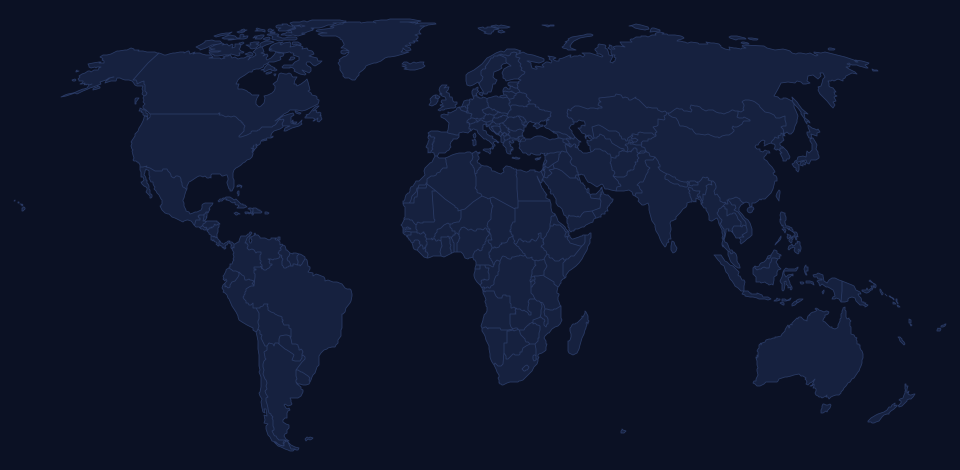
Each dot is a dark sky place, colored by Bortle class; select one for its page. Diamonds are star parties. See Dark sky places outside the United States for the full list, darkest first.
Camping and lodging at Iriomote-Ishigaki National Park
The nearest town with motels or inns is Ishigaki, Japan. Check the official site for campgrounds and overnight rules; many parks close their gates at night, so ask about after-dark access.
Dark sky places nearest Iriomote-Ishigaki National Park
| Place | Where | Bortle | Distance |
|---|---|---|---|
| Hehuan Mountain | Ren'ai, Taiwan | 3 | 264 km (164 mi) |
| Batanes Islands | Basco, Philippines | 2 | 475 km (295 mi) |
| Mount Pulag | Kabayan, Philippines | 2 | 916 km (569 mi) |
| Xichong, Shenzhen | Shenzhen, China | 4 | 972 km (604 mi) |
| WK Forest Reserve | Tanay, Philippines | 4 | 1,104 km (686 mi) |
| Calaguas Island | Vinzons, Philippines | 1 | 1,105 km (687 mi) |
| Zambales | San Antonio, Philippines | 3 | 1,125 km (699 mi) |
| Cagbalete Island | Mauban, Philippines | 2 | 1,143 km (710 mi) |
Observatories and astronomy clubs near Iriomote-Ishigaki National Park
No observatory or astronomy club on the list is near Iriomote-Ishigaki National Park.
See observatories and astronomy clubs around the world. Local clubs often hold their star parties at dark sky places like this one.
Iriomote-Ishigaki National Park record
Every value in the dark sky places dataset for Iriomote-Ishigaki National Park
| Park | 160 |
|---|---|
| Name | Iriomote-Ishigaki National Park |
| Area | Asia |
| Region | Okinawa |
| Country | Japan |
| Location | Ishigaki |
| URL | https://www.japan.travel/national-parks/parks/iriomote-ishigaki |
| Lat | 24.34980 |
| Lon | 123.86550 |
| LatLonSpot | Iriomote Island (DarkSky listing point) |
| Elevation_m | 100 |
| LandManager | Ministry of the Environment (Japan) |
| Status | Open |
| Lodging | Ishigaki, Japan |
| Sources | https://darksky.org/places/iriomote-ishigaki-national-park/ |
| Bortle | 1 |
| SQM | 21.99 |
| DarkSky | Park |
| DarkSkyYear | 2018 |
From the site's dark sky places dataset (darkparksglobal_q426). The sky by season is computed from the coordinates.